
I created Notehouse after wrestling with systems of all kinds at more than half a dozen nonprofits.
Case management tools. CRMs. Project trackers. Databases that promised to "do it all" and instead did… too much. I've watched staff spend more time learning software than serving people. I've seen good tools abandoned after months of expensive onboarding because they simply didn't fit how humans actually work.
After all that, one thing became very clear: simple is not a downgrade. It's a strategy.
Here are five reasons why simplicity should be non-negotiable when choosing software for your organization.
This one sounds obvious, but it's the most commonly ignored.
When software is overly complicated, people don't magically rise to meet it — they quietly stop using it. Or they use it at the most basic level possible, which defeats the point of investing in it at all.
Simple, intuitive software lowers the barrier to entry. It allows staff with different comfort levels, roles, and time constraints to actually adopt it. Wider adoption means better data, better continuity, and fewer systems living half-used in the background.
Nonprofit work is emotionally demanding. High stakes. Limited resources. Constant urgency.
The last thing your team needs is a system that feels like another obstacle to overcome. Good software should feel as easy and familiar as a notebook and pen — something you reach for instinctively, not something you brace yourself to open. When tools add friction instead of reducing it, they contribute to the burnout crisis already affecting the sector.
The best tools feel like an extension of your thinking, not a distraction from it.
Every hour spent onboarding is an hour not spent on your mission.
When a system requires a 10-hour training just to get started — and another 10 hours every time someone new joins — that's a tax your organization keeps paying over and over again. Simple tools shorten onboarding, reduce errors, and make transitions smoother when staff inevitably change.
Less training. Fewer manuals. More actual work getting done. And for organizations watching every dollar, simplicity also means more affordable software — because you're not paying for complexity you don't need.
If your core work is case notes, then the system should center case notes — not dashboards, pop-ups, or features you'll never touch.
Too many tools prioritize bells and whistles over function. They pull attention away from the work instead of supporting it. When software stays out of the way, people can focus on what matters: showing up for clients, documenting thoughtfully, and staying present.
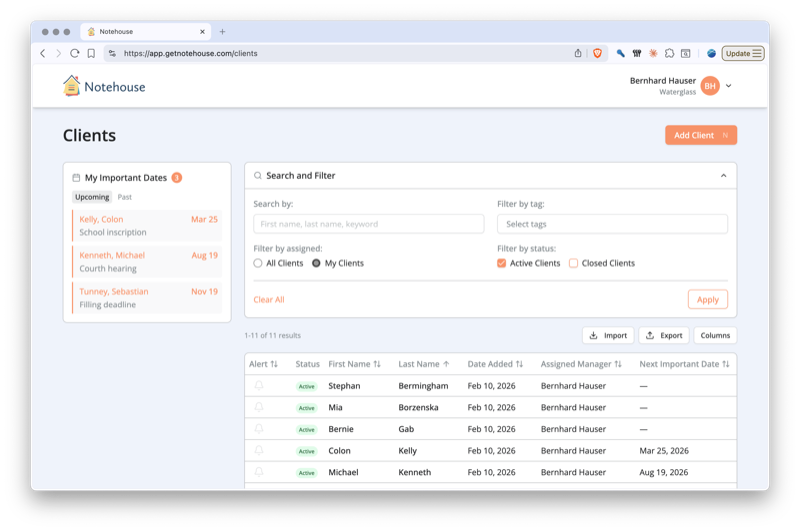 When software stays out of the way, you can focus on what matters — documenting thoughtfully and staying present with clients.
That's why Notehouse is built around the work itself — not everything around the work.
Choosing easy-to-use software sends a message.
It tells your team that you value their time, their energy, and their capacity. That you don't expect them to bend themselves around a flashy system that might be replaced in a year anyway. That sustainability matters more than novelty.
People-first organizations choose tools that respect the people doing the work.
 Choosing easy-to-use tools sends a message: you value your team's time, energy, and capacity.
At the end of the day, software should support your work — not compete with it.
Simplicity isn't about cutting corners or settling for less. It's about designing systems that honor how people actually think, write, and show up for one another. Especially in mission-driven organizations, where time, energy, and attention are precious resources.
Notehouse exists because I've seen what happens when tools get in the way of the work — and because I believe nonprofits deserve systems that feel human, intuitive, and sustainable. Learn more about how Notehouse is built for nonprofits who value simplicity. When you choose simple, you're choosing clarity. You're choosing usability. And most importantly, you're choosing your people.
That's not a compromise. That's the point.

Notehouse is a simple, yet powerful case management solution for teams. Get started with a free trial, no credit card required.
Explore Notehouse ›Powerfully Simple Case Management You'll Actually Use

4.7 stars from 101 customers reviews
Case Management Software for nonprofit leaders, counselors, managers, and social workers.
© 2026 Waterglass UK Ltd.


Free Tools