

Social workers do their best to support their clients every day. They juggle large caseloads, navigate dozens of support programs, and strive to be empathetic without sacrificing their mental health. Social work is considered a high-stress job and nearly 60% of professionals have experienced burnout and work-related health problems at some point. Learning how to prevent burnout is essential for longevity in the field.
There are two important tools that social workers can use to protect their physical, mental, and emotional health: self soothing and self care. These can reduce the body's stress response, preventing burnout and making your work more effective. Learn more about self soothing and self care for social workers along with some actionable ways to get through the day.
Self care is a series of habits you develop to boost your overall health. Self care occurs when you tap into these habits over a long period rather than picking them up any time you feel stressed or overwhelmed. After all, getting eight hours of sleep each night is more effective than going to bed early one or two nights a week!
Self care takes work. Keeping up with a healthy diet is a form of self care because it means you are giving your body the nutrients it needs to thrive. However, this requires you to go grocery shopping, choose healthy foods, and prepare meals throughout the week. You have to trust that this investment in yourself will pay off in the long run.
Self soothing is an immediate response to a stressful or negative situation. If you have a bad meeting where multiple participants get angry or upset, you may need to practice self soothing during or after the event. Self soothing activities allow you to control your heart rate, breathing, and emotions.
The main challenge with self soothing is choosing healthy activities. Making a hot cup of tea or meditating quietly in a cool, dark room are good self soothing options for social workers. It's tempting to turn to junk food or head to the bar after work, but these self soothing activities can make you feel physically and mentally worse.
Self care consists of long-term habits that promote your health. Self soothing is an immediate response to a stressful situation or event. While developing self care habits can lower your stress and anxiety levels over time, you will still occasionally need self soothing techniques.
For example, walking in the park every day as a cardio workout is self care. Walking around the parking lot after a tough client call is self soothing.
There are multiple ways to practice self care for social workers. You can take steps to invest in healthier habits in both your personal and professional life. Here are a few examples of self care:
It's okay to go out for dinner on occasion or stay out late for a concert. However, long-term self care can support your health through the most stressful times.
 Long-term self-care habits like exercise, nutrition, and boundary-setting build the resilience you need to weather stressful periods.
Everyone has their own self soothing techniques to calm down after a stressful event. Here are a few examples to try.
Listen to your body when you need to self soothe. Some people want to move around while others need to sit for a few minutes.
Self care for social workers starts with good workflows. If you can invest in processes and systems that save time, you can focus your energy on more meaningful work. An effective note taking platform like Notehouse will make it easier to jot down important insights and tasks during client meetings. You can focus more on the person and less on your notes.
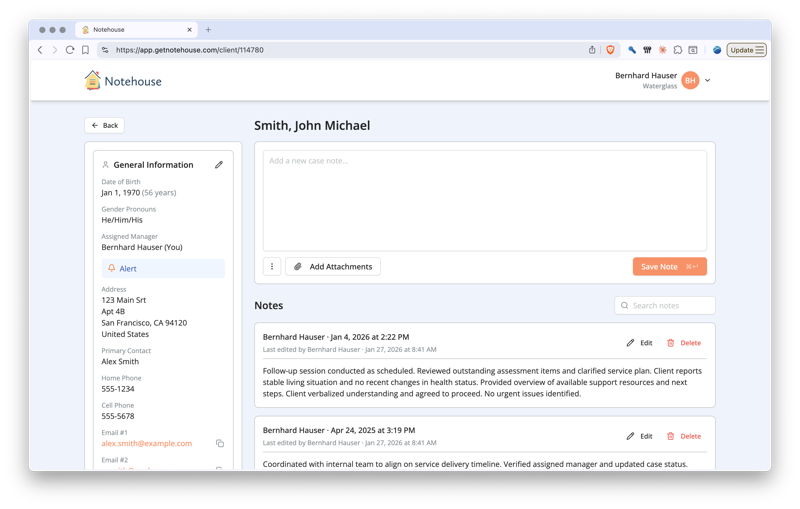 Organized, easy-to-read notes save time during review and reduce the stress of working from incomplete or messy records.
When you review these notes later, you won't have to interpret messy handwriting or half-written thoughts. This saves time and reduces your stress levels because you can see exactly what action items need to be done.
Investing in yourself is one of the best ways to invest in your clients. Learn more about the features offered by Notehouse and how they can make you a more effective—and less stressed—social worker.


Notehouse is a simple, yet powerful case management solution for teams. Get started with a free trial, no credit card required.
Explore Notehouse ›Powerfully Simple Case Management You'll Actually Use

4.7 stars from 101 customers reviews
Case Management Software for nonprofit leaders, counselors, managers, and social workers.
© 2026 Waterglass UK Ltd.


Free Tools